
da pro network:
When will time end?
posted on: 22-10-2011 source: Space Rip
comments: 0
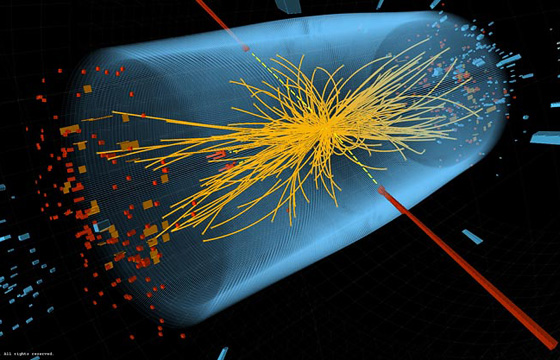 Higgs Boson
Is the Universe infinite?
posted on: 20-08-2011 source: Space Rip
comments: 0
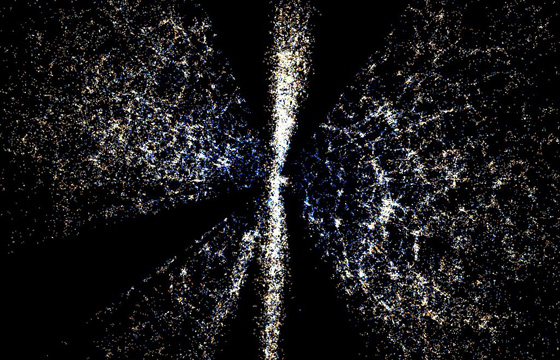 Infinite Universe
In modern times, we built giant telescopes that have allowed us to cast our gaze deep into the universe. Astronomers have been able to look back to near the time of its birth. They've reconstructed the course of cosmic history in astonishing detail. From intensive computer modeling, and myriad clos... whole story
Energy scales of the Universe
posted on: 10-10-2011 source: Space Rip
comments: 0
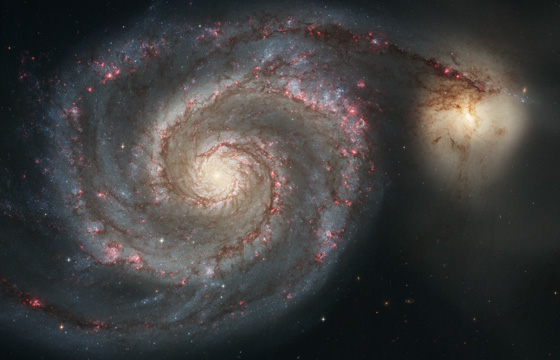 Galaxy M51
To see how energy stitches the cosmos together, and how we fit within it, we now journey through the power scales of the universe From atoms nearly frozen to stillness. To Earth's largest explosions. From stars, colliding, exploding. To distant centers of power so strange and violent ... whole story
Black hole at the center of the Milky Way
posted on: 03-10-2011 source: Space Rip
comments: 0
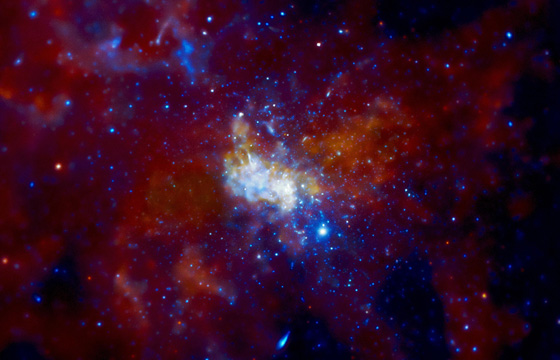 Black Hole in Milky Way
That center – bulging up and out of the galactic disk – is tightly packed with stars. Thick dust and blinding starlight have long obscured our vision into the mysterious inner regions of this so-called "bulge".
And yet, ... whole story